
The landscape of modern medicine is undergoing a profound transformation, driven by the rapid evolution of surgical robotics, automated prosthetics, and precision diagnostic equipment. As robotic systems become more autonomous and minimally invasive, they demand a logistical paradox from their internal components: unprecedented power delivered within increasingly confined spaces.
For design engineers and system architects in the medical sector, a critical question has emerged: Can Ultra-Compact Brushless DC Motors Deliver the High Torque Required for Tomorrow's Medical Robotics?
To understand how the industry is addressing this challenge, we must examine the intersection of advanced electromagnetic design, precision manufacturing, and the stringent performance metrics required for next-generation healthcare technologies.
Medical robotics, particularly robotic-assisted surgery (RAS) systems and smart orthotic devices, operate under uncompromising spatial constraints. A surgical robotic arm must mimic, or exceed, the dexterity of a human hand while navigating tight anatomical corridors. Every millimeter of diameter and every gram of weight added to the motor assembly increases the inertia of the robotic joints, potentially compromising tactile feedback and precision.
However, reducing the physical footprint of a motor traditionally meant sacrificing mechanical output. In critical procedures—such as bone drilling, deep-tissue retraction, or continuous suture manipulation—temporary torque drops or stalling are completely unacceptable.
This is exactly where the industry is witnessing a technological pivot. Modern manufacturing methodologies are proving that compact size no longer mandates a compromise in torque density.
Achieving high torque in micro-scale profiles requires moving beyond traditional motor architecture. Pioneering manufacturers like Hengfu have spent years optimizing electromagnetic topologies to overcome the thermal and physical limitations of micro-motion systems.
Several foundational technological advancements allow modern Brushless DC Motors to meet these aggressive medical standards:
Traditional motors often suffer from wasted space within the stator windings. By utilizing high-density stator winding techniques and segmented core designs, engineers can maximize the slot-fill factor. When combined with ultra-high-grade NdFeB (Neodymium Iron Boron) permanent magnets, the magnetic flux linkage within the motor is optimized, yielding a substantially higher torque output per unit volume.
Precision in medical robotics is not just about raw power; it is about control. Modern micro Brushless DC Motors are designed to integrate seamlessly with sophisticated Field-Oriented Control algorithms. FOC allows for smooth torque delivery even at near-zero speeds, eliminating the cogging torque that could cause micro-vibrations during delicate surgical incisions.
When a miniature motor generates high torque, it inherently produces heat. In a medical environment, elevated surface temperatures can pose risks to surrounding tissue or sensitive electronic sensors. The industry has responded with specialized housing materials and specialized thermal potting compounds that accelerate heat transfer away from the motor core, allowing for sustained peak torque performance without thermal runaway.
To illustrate how different motor topologies stack up within medical and precision automation frameworks, the following matrix outlines key operational characteristics:
| Performance Metric | Traditional Brushed Micro Motors | Standard Micro BLDC Motors | Next-Gen Ultra-Compact BLDC Motors |
| Torque-to-Volume Ratio | Low to Moderate | Moderate | Exceptionally High |
| Operational Lifespan | Limited (Brush wear) | Long (Bearing dependent) | Ultra-Long (Premium bearings & balanced rotors) |
| Cogging & Vibration | High at low speeds | Moderate | Minimal (Optimized slot/pole combinations) |
| Thermal Dissipation Efficiency | Poor | Moderate | High (Advanced housing & potting) |
| Sterilization Adaptability | Extremely Low | Moderate | High (With specialized encapsulation) |
As medical device innovators seek reliable partners to navigate these complex electromechanical challenges, the expertise of long-standing micro motor specialists becomes invaluable.
Drawing from over three decades of deep manufacturing heritage established since 1992, Hengfu has emerged as a sophisticated entity in the development of precision motion control. As a National High-tech Enterprise and a recognized "Specialized, Sophisticated, Unique, and New" SME, the company leverages its provincial-level Engineering Technology R&D centers to push the boundaries of energy-efficient motor design.
The engineering philosophy behind modern high-torque micro systems focuses on total customization and stringent quality control. For medical robotics applications, the proprietary design of the core series emphasizes stable power delivery and minimal electromagnetic interference (EMI)—a crucial factor when operating in close proximity to sensitive hospital diagnostic equipment.
To meet the rigorous demands of robotic medical applications, the structural parameters of these specialized Brushless DC Motors are meticulously engineered
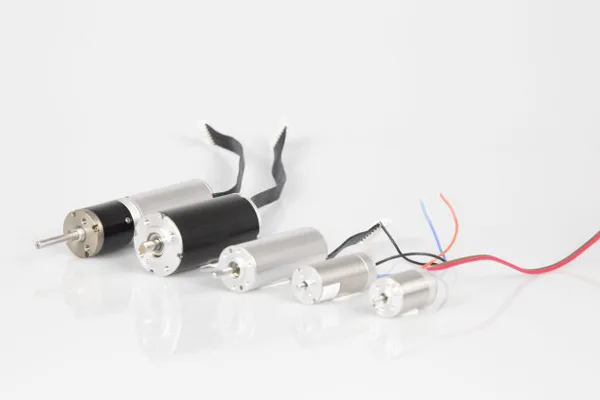
Engineered within ultra-compact form factors ranging from 16mm to 42mm, minimizing the footprint within multi-axis robotic joints.
Designed to support versatile operational envelopes, achieving rated speeds from 2,000 RPM up to high-speed profiles exceeding 20,000 RPM.
Optimized for low-voltage, high-safety medical baselines, typically configured for 12V, 24V, or 36V DC systems.
Advanced electromagnetic alignment allows these micro units to consistently exceed 85% operational efficiency, reducing battery drain in portable or untethered robotic systems.
Engineered to mate perfectly with high-ratio gear reducers and non-standard customized shaft configurations, ensuring smooth torque multiplication without adding radial play.
So, can ultra-compact Brushless DC Motors deliver the high torque required for tomorrow's medical robotics? The empirical evidence points to a definitive yes. Through the convergence of high-grade magnetic materials, optimized stator geometry, and advanced thermal management, micro motors are no longer the bottleneck in robotic dexterity.
As healthcare continues to move toward more intelligent, precise, and less invasive interventions, the reliance on highly specialized motor R&D centers will only deepen. Companies that maintain a strict focus on precision manufacturing and continuous patent-driven innovation are successfully paving the way for safer, more reliable, and highly responsive medical robotic systems worldwide.
Yes, by utilizing high-density segmented stator windings, premium Neodymium permanent magnets, and advanced Field-Oriented Control (FOC), modern ultra-compact Brushless DC Motors maximize magnetic flux linkage to deliver exceptional torque density within micro-scale footprints.
Engineers mitigate cogging torque by optimizing the stator slot and rotor pole combinations, skewing the stator slots, and utilizing sinusoidal drive architectures that ensure perfectly smooth rotational transitions at ultra-low speeds.
Effective thermal management, achieved via high-thermal-conductivity potting materials and specialized alloy housings, rapidly dissolves heat from the internal coils, preventing demagnetization of the magnets and allowing the motor to sustain peak torque without overheating.